Two Economic Powers Approach
The “Two Economic Powers” approach is a retirement income planning strategy that combines traditional investment market returns with the principles of actuarial science. Developed by Dr. Wade Pfau and Jason Sanger, this method aims to create a balanced financial plan for both the accumulation and distribution phases of retirement.
.
The Two Economic Powers Defined
The approach argues that relying solely on investment returns is insufficient for a secure retirement. Instead, it combines two distinct forces:
- Investments (Market Returns): This involves investing in stocks, bonds, or other assets to grow capital based on market performance.
- Actuarial Science (Risk Pooling): This power uses risk pooling, commonly found in insurance products like annuities or life insurance, to protect against outliving assets. It allows individuals to plan based on population averages rather than worrying about being an outlier who lives a very long time.
Purpose and Benefits
The primary goal of this approach is to create a more stable and higher retirement income stream compared to traditional methods.
Increased Security: By using actuarial science, this method creates a “floor” of reliable income, reducing the risk of depleting funds due to market volatility or longevity risk.
- “License to Spend”: A secure foundation built on these two powers can give retirees more confidence to spend their money, as they are less concerned about running out of funds.
- Diversification: It diversifies retirement income sources beyond just the stock market.
- Power 1: Investment Power (Accumulation)
- This is the traditional “One Economic Power” model.
- It relies on market-based assets like stocks and bonds to grow wealth through interest rates and rates of return.
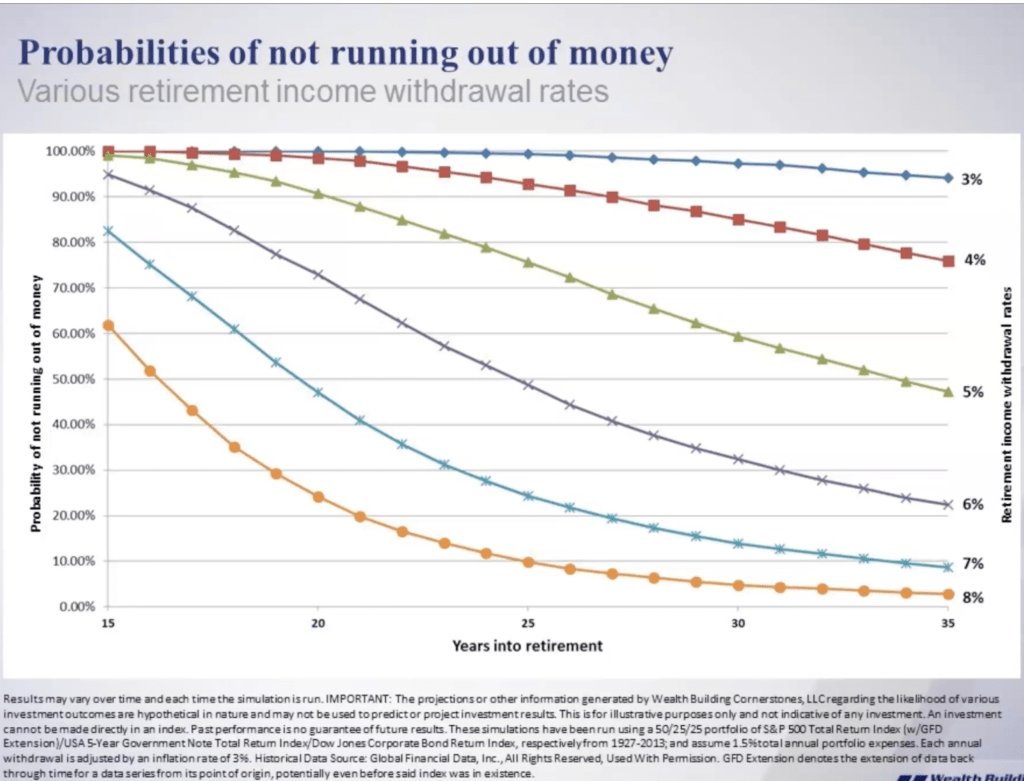
- While effective for growth, it is subject to market volatility and “sequence of return” risks during distribution.
How the Approach Works
- Integrated Efficiency: The approach argues that most people today rely solely on their 401(k) or IRA (one power) and have lost the protection of the traditional pension plan (the second power).
- Strategic Diversification: By marrying market assets with products like properly structured whole life insurance or annuities, retirees can choose where to draw income from depending on market conditions.
- Risk Mitigation: If the market is down, the retiree can withdraw from the actuarial-based asset, avoiding the “death spiral” of selling market investments at a loss.
- Outcome: Using both powers together typically results in higher reliable income streams and lower overall financial risk compared to using market investments alone.
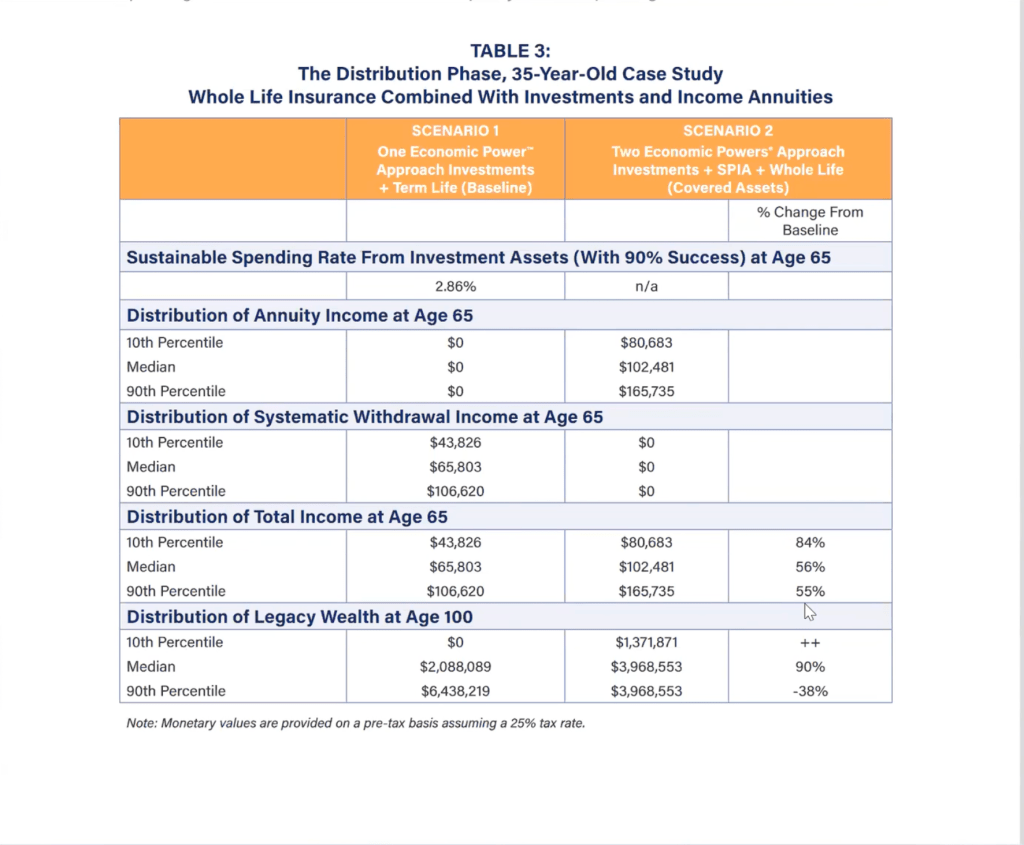
An example of the potential increase in efficiency and income at retirement using the two-economic powers approach.
Volatility Buffer
If a client has the majority of their assets tied up in the first economic approach (Investments), which seems to be the case for many, it is vitally important to have a volatility buffer leading into retirement.
A volatility buffer is a non-correlated, stable asset used in retirement to provide income during market downturns, preventing the need to sell depreciated investments. It acts as a safety net, protecting portfolio longevity by allowing investments time to recover rather than locking in losses.
Key Examples of Volatility Buffers.
• Cash/Cash Equivalents: Money market accounts, CDs, and high-yield savings.
• Fixed Income: Short-duration Treasuries or bond ladders.
• Insurance Products: Cash value of whole life insurance, annuities, or indexed annuities.
• Life Settlements: Sell an existing life insurance policy
• Reverse Mortgages: Convert a portion of home equity into cash and eliminate making any more monthly mortgage payments

The WBC platform emphasizes using these buffers to mitigate “sequence of returns risk”—the danger of withdrawing money during a down market. By utilizing a buffer, retirees can sustain a higher standard of living and protect their wealth from early retirement market declines
An example of the potential increase in efficiency and income at retirement using the two-economic powers approach.